Framework
Traversing
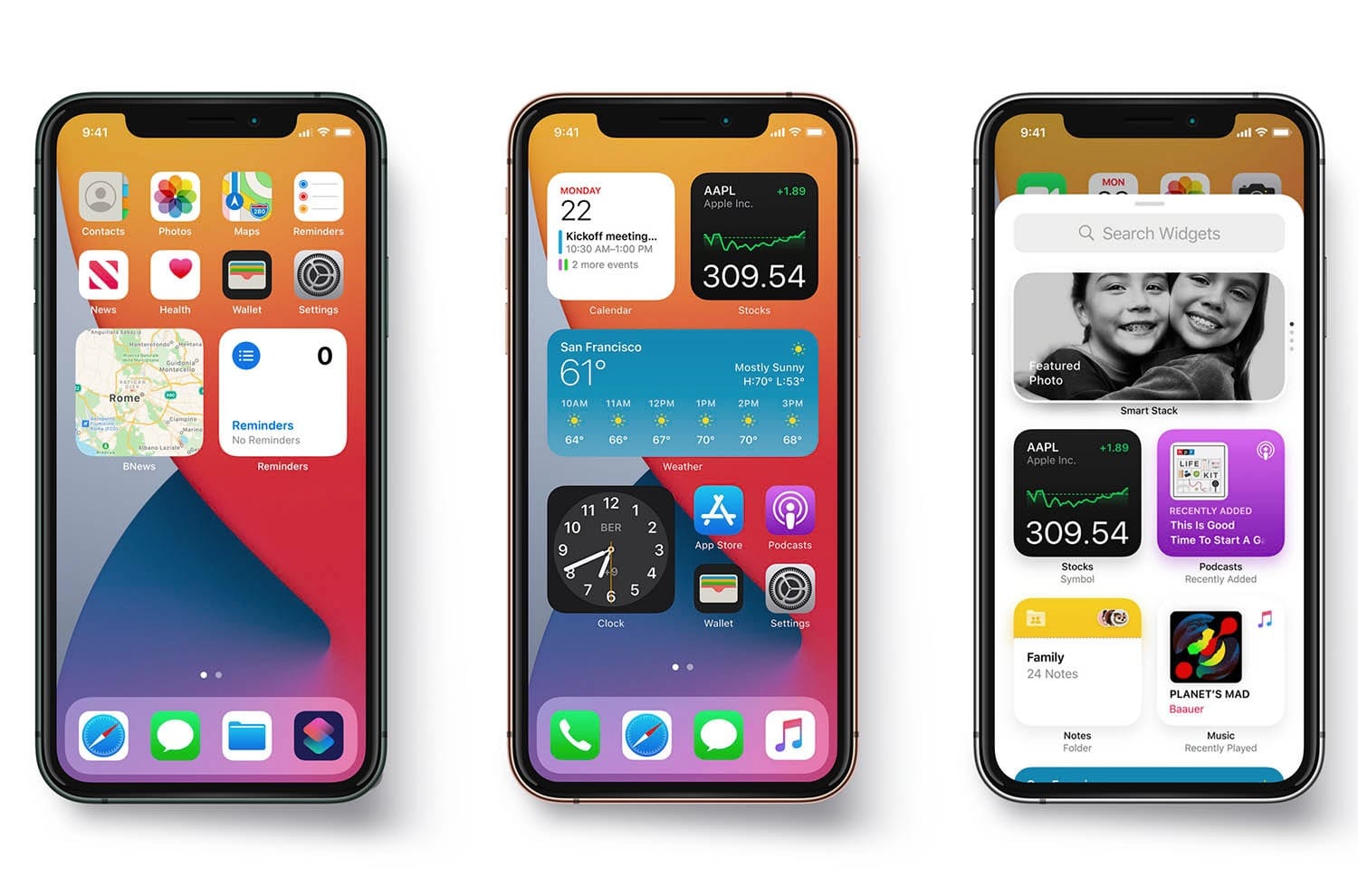
This thesis examines the frameworks humanity has constructed throughout history to mediate its living environment. A framework may be physical — urban infrastructure, structural systems — or virtual: cartographic conventions, mapping methods, representational codes.
The term framework, as used here, denotes any tool that enables us to perceive what cannot be directly experienced — whether due to differences in scale (infrastructure versus the human body) or differences in medium (a paper map versus the territory it describes). In this sense, a framework creates a format through which we transcend the limits of ordinary perception.
Chapter I — Framework examines Cedric Price and Joan Littlewood's The Fun Palace (1960s), tracing how it sought to bridge human mental activity and physical mobility through moveable structures and cybernetic speculation, and how its logic anticipates the computational environments we inhabit today. Chapter II — Agency turns to cartography, mapping, and their expanded fields, drawing on Borges's fable On Exactitude in Science and Baudrillard's theory of the simulacrum.
The Fun Palace: A Laboratory of Fun by Cedric Price and Jean Littlewood
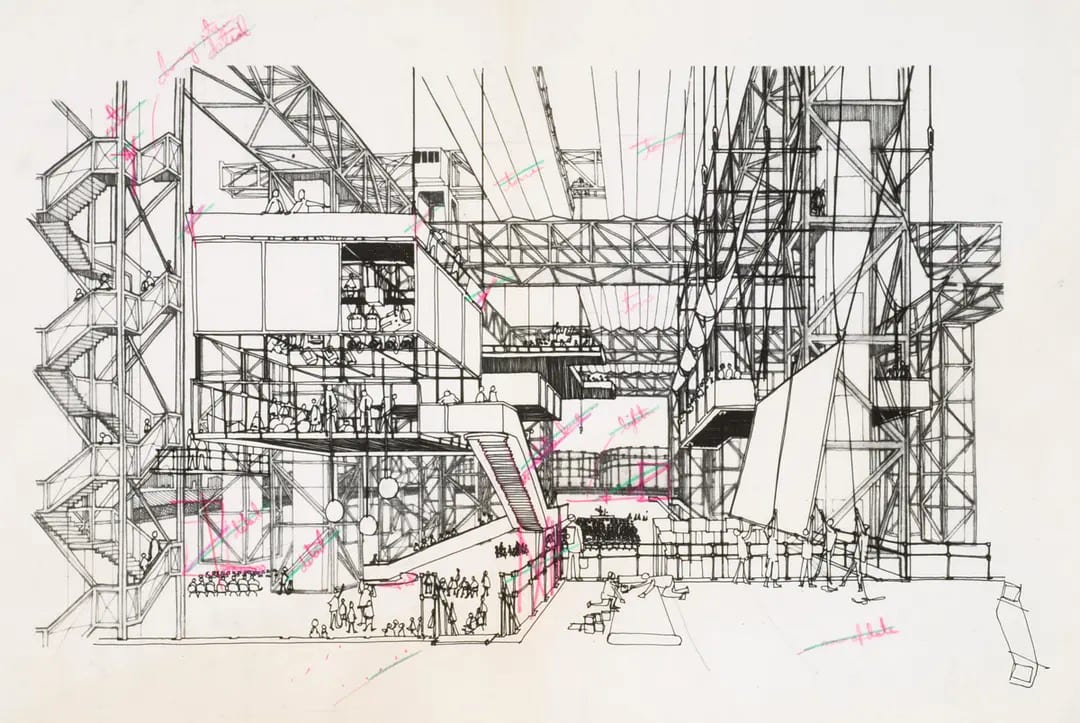
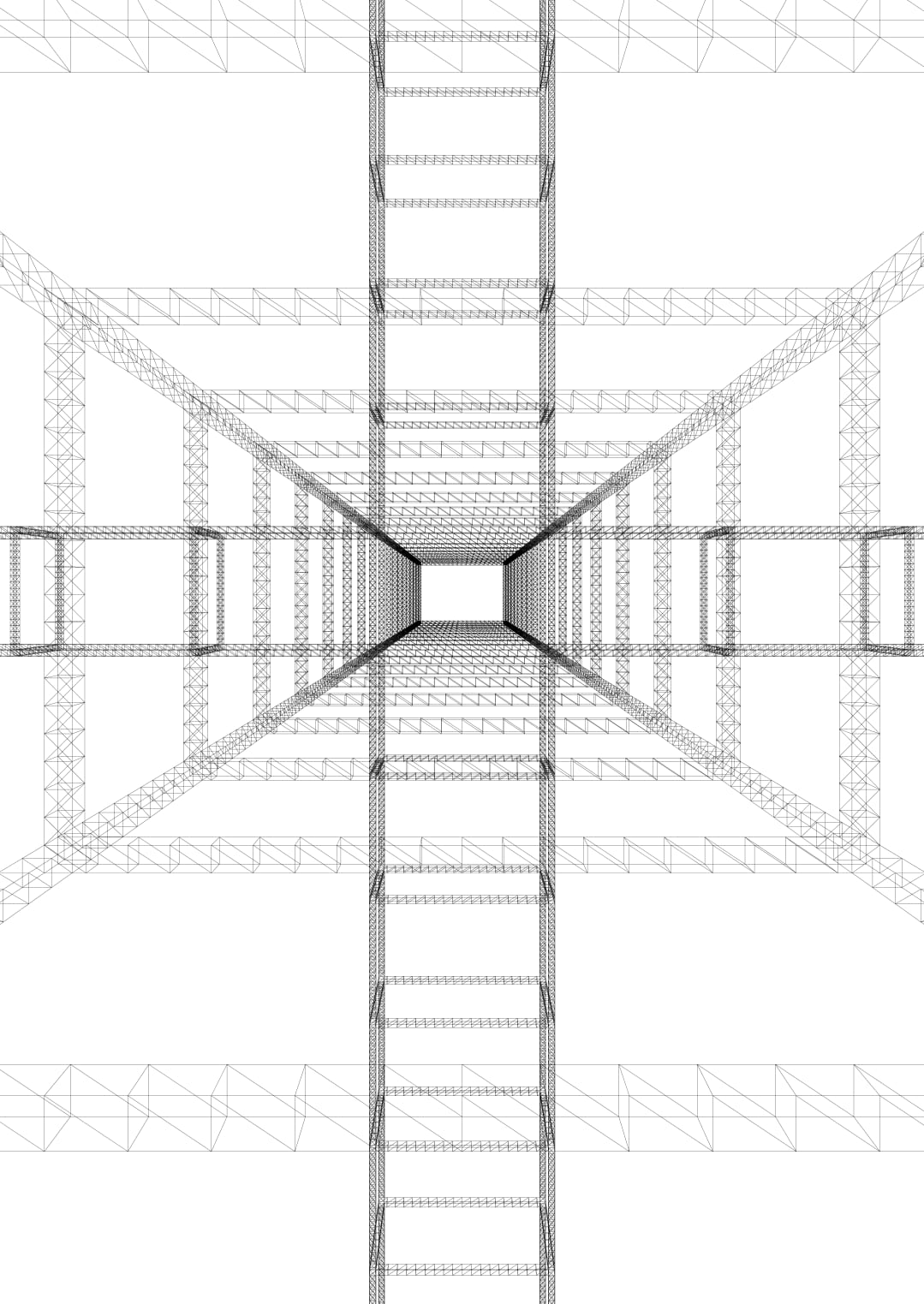
The Fun Palace challenged the traditional definition of architecture by drawing on the emerging sciences of cybernetics, information technology, and game theory — as well as Situationism and theater — to develop a radically new concept of improvisational architecture capable of negotiating the uncertain social terrain of postwar Britain.1 Everything within this social interactive machine was moveable and changeable according to users' preferences,2 yet the structural framework remained fixed — a logic that resonates directly with the computer programs we use today: arrays of algorithmic functions and logical gateways controlling temporal events within a virtual device.3
"As socially interactive architecture, the Fun Palace integrated concepts of technological interchangeability with social participation and improvisation as innovative and egalitarian alternatives to traditional free time and education, giving back to the working classes a sense of agency and creativity. The three-dimensional structure of the Fun Palace was the operative space-time matrix of a virtual architecture."
— Stanley Mathews, The Fun Palace as Virtual Architecture, JAE Vol. 59 No. 3 (Feb. 2006), p. 39.
Price further argued that human labor might ultimately be liberated through the evolution of technology. The Fun Palace was conceived as a bridge between physical mobility and mental dexterity — a tangible computational framework within which visitors could experience the constant interplay of virtual and physical interaction, with contents in perpetual flux.
"A short-life toy of dimensions and organizations not limited by or to a particular site is one good way of trying, in physical terms, to catch up with the mental dexterity and mobility exercised by all today."
— Cedric Price, Argument of Fun Palace, TDR Vol. 12 No. 3 (Spring 1968).
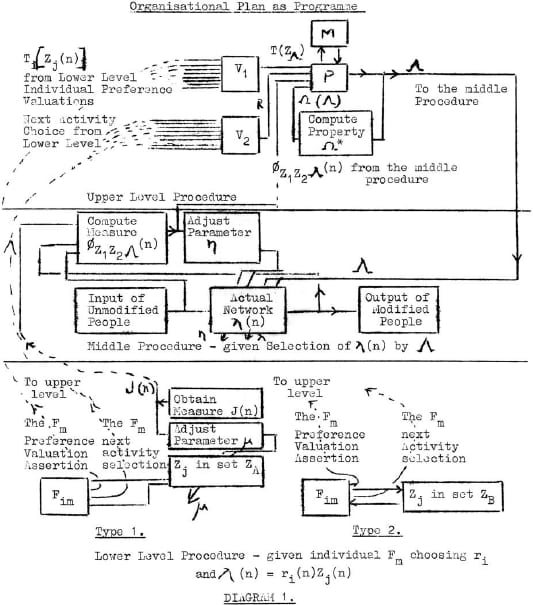
"Electronic sensors and response terminals would gather and assign a prioritized value to raw data on the interests and activity preferences of individual users. A state-of-the-art IBM 360-30 computer would then compile the data to establish overall user trends, which would in turn set the parameters for the modification of spaces and activities within the Fun Palace. The building computer would then reallocate moveable walls and walkways to adapt the form and layout of the Fun Palace to changes in use."4
Simulacra and Simulation by Jean Baudrillard
Jean Baudrillard's Simulacra and Simulation (1981) opens with a fable drawn from Jorge Luis Borges: a map of the Empire drawn at such a scale that it coincides perfectly with the territory it represents. For Baudrillard, this fable allegorizes the condition of the contemporary — a world in which the real has been replaced by models of the real, in which the simulation precedes and generates what it supposedly represents.
"The territory no longer precedes the map, nor does it survive it. It is nevertheless the map that precedes the territory — precession of simulacra — that engenders the territory."
— Jean Baudrillard, Simulacra and Simulation, 1981.5
Baudrillard identifies four successive orders of simulacra: the faithful copy; the perverse copy that masks the absence of a basic reality; the copy that plays at being a copy; and finally the pure simulacrum — the image that bears no relation to any reality whatsoever. The trajectory is one of increasing abstraction and detachment from the referent, until the image becomes self-referential, generating its own reality.
Applied to architecture, Baudrillard's framework produces an unsettling proposition: that architectural drawings, models, and representations are not neutral instruments of communication but active agents in the production of what they claim to merely document. The image of a building is never simply a record; it is always already a transformation, a displacement, a substitution.
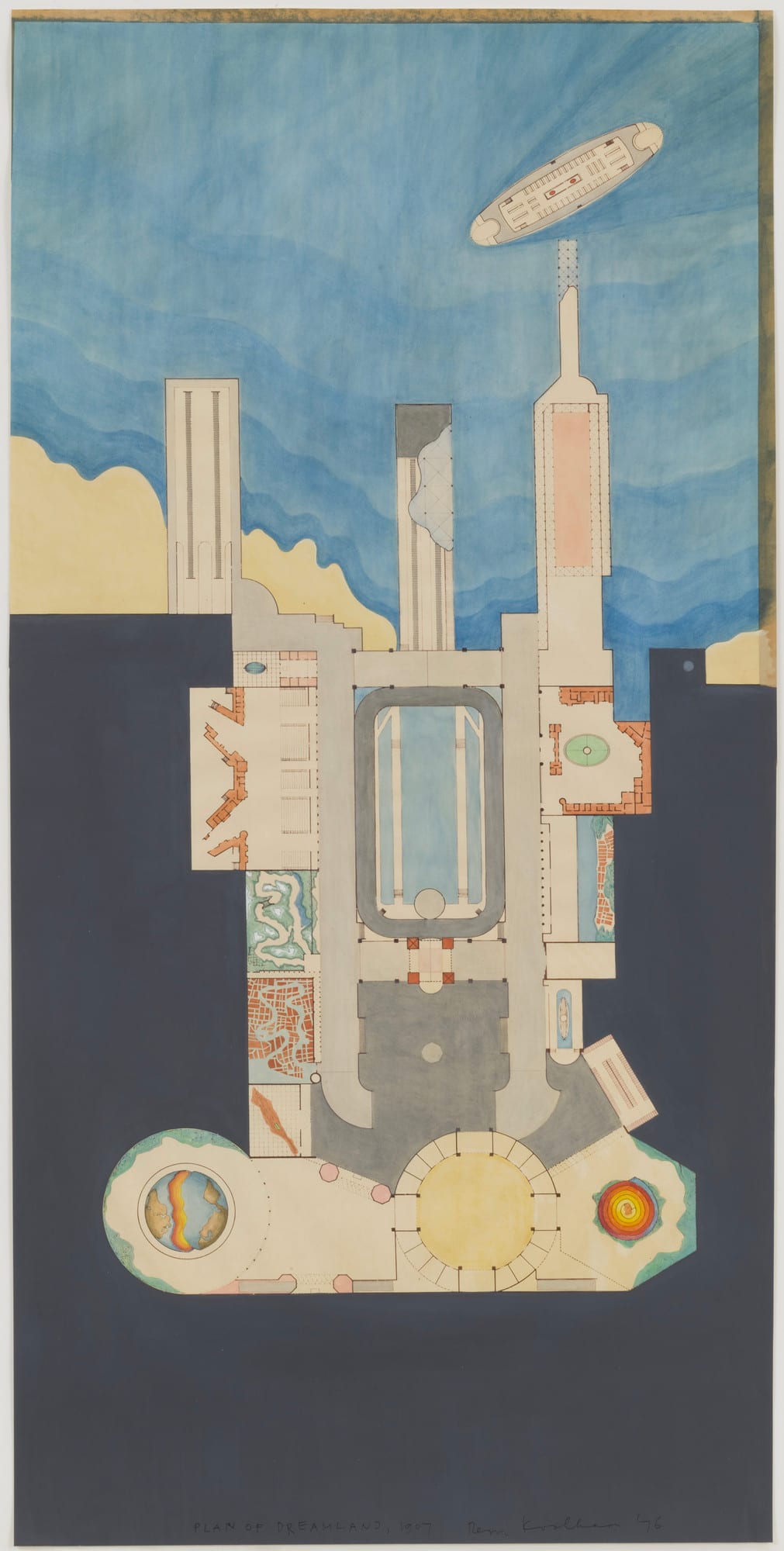
Rem Koolhaas and OMA's work is particularly instructive here. Projects such as the Parc de la Villette competition entry and the Euralille masterplan operate precisely at the level of the simulacrum: they produce not buildings but images of urban possibility — representations of programmatic density and logistical complexity that are as much the work as any realized structure. The framework, in this reading, is not an enabling infrastructure but a representational strategy: a way of generating urban effect through the accumulation and layering of images.6
Footnotes
- Stanley Mathews, The Fun Palace as Virtual Architecture: Cedric Price and the Practices of Indeterminacy, Journal of Architectural Education, Vol. 59, No. 3 (Feb. 2006), p. 39.
- Cedric Price, Works II (London: Architectural Association, 1984), p. 54.
- Mathews, p. 39.
- Ibid., p. 44.
- Jean Baudrillard, Simulacra and Simulation, trans. Sheila Faria Glaser (Ann Arbor: University of Michigan Press, 1994), p. 1.
- Jorge Luis Borges, "On Exactitude in Science," in Collected Fictions, trans. Andrew Hurley (New York: Penguin, 1998).