Material—
scape
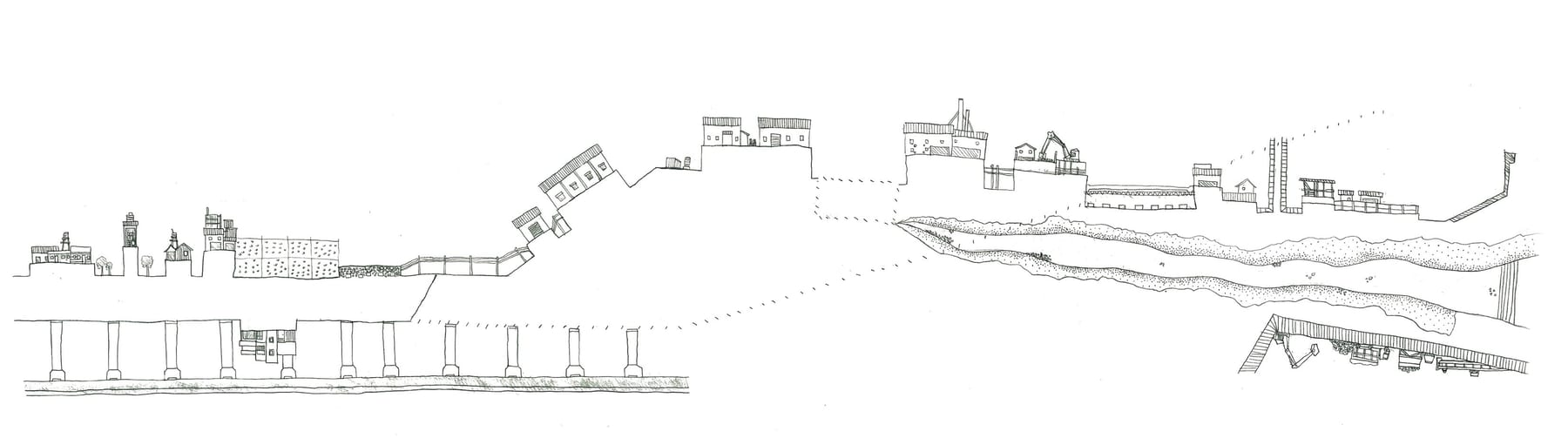
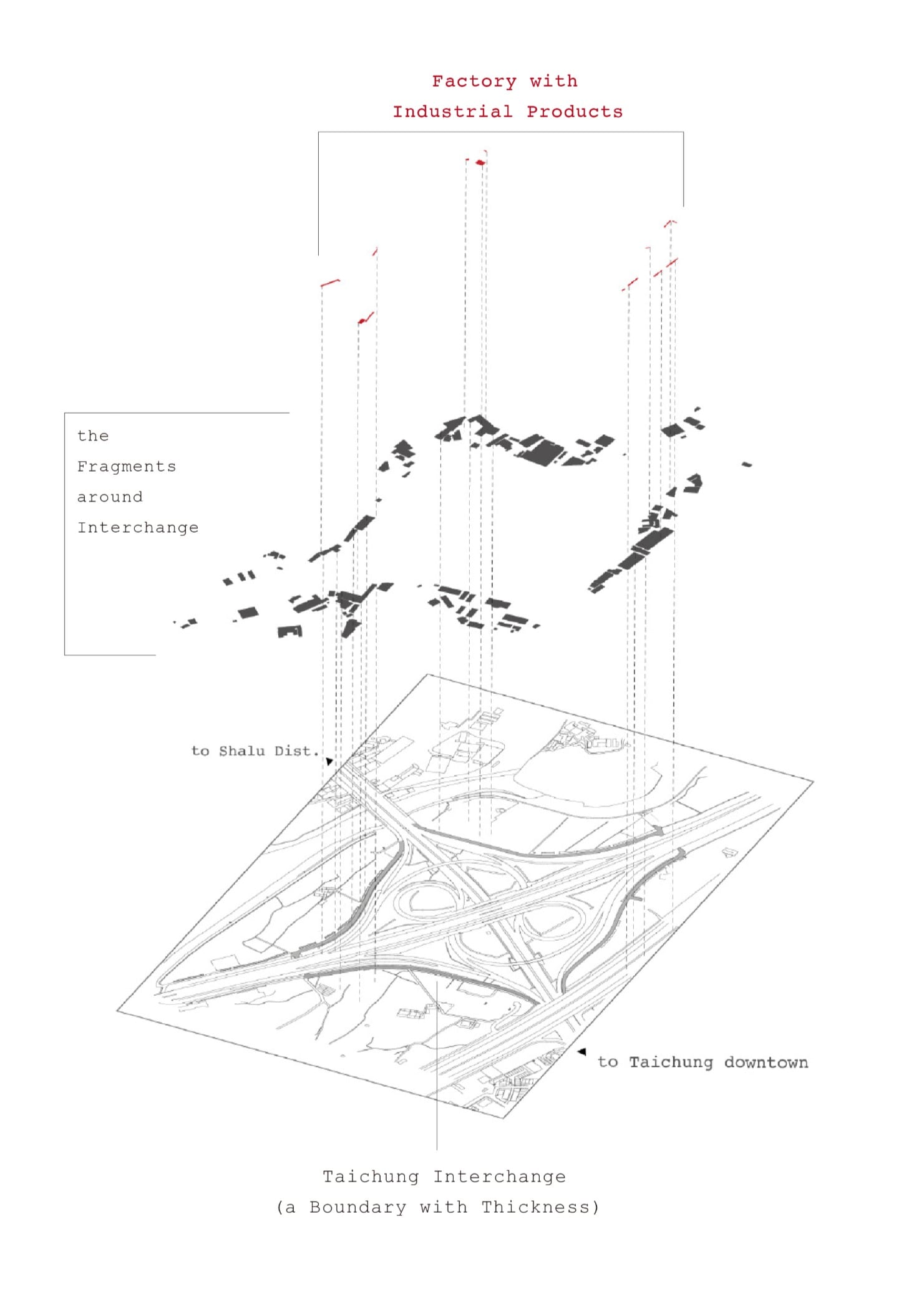
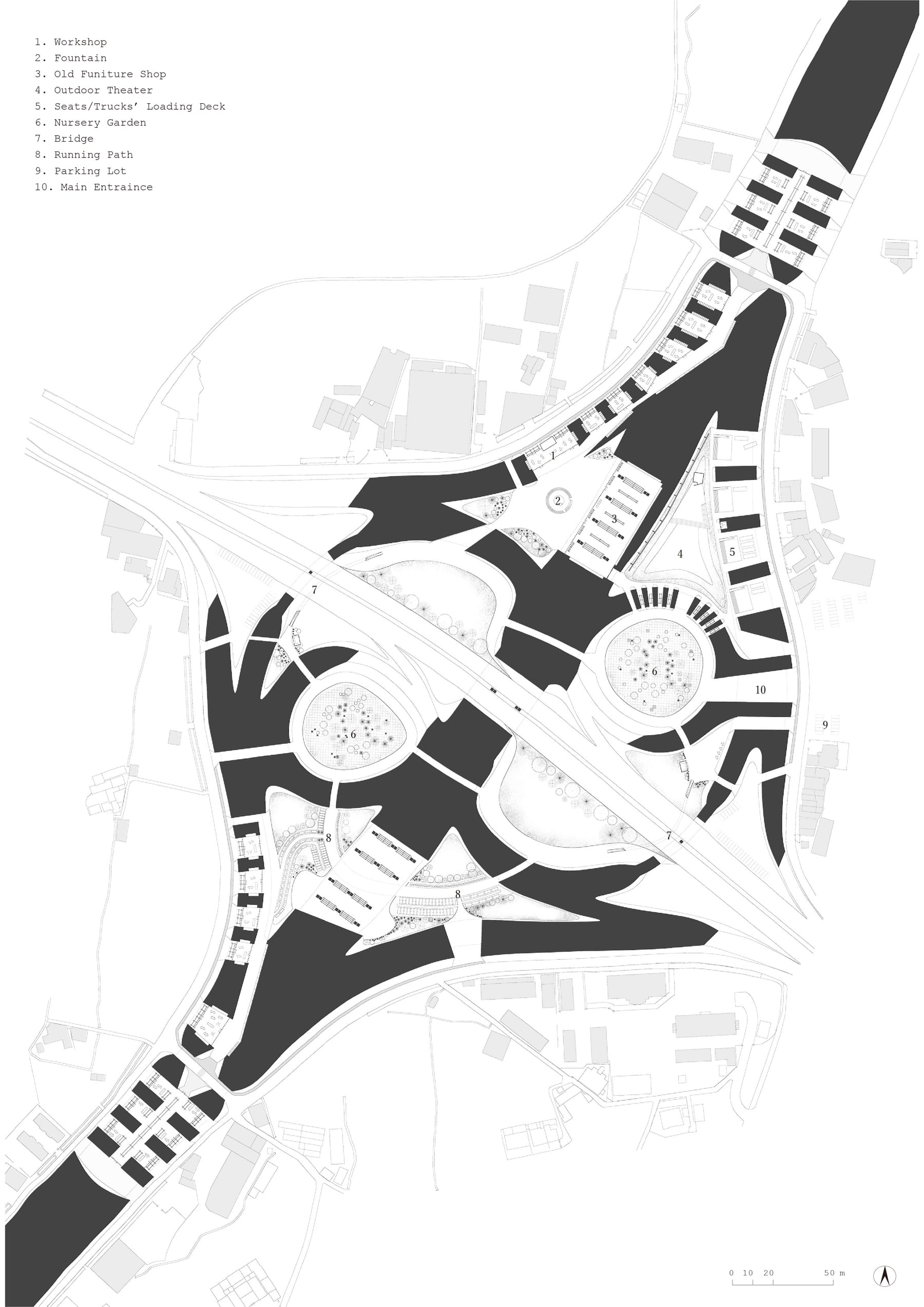
The site is located on the western outskirts of Taichung City — a suburban area bisected by a piece of mega-infrastructure: the Taichung Interchange. The interchange intruded upon the urban fabric and daily lives of local residents, transforming the area into a site for secondary industries.
The fragmented figure-ground of the neighborhood reflects the disconnection between these factories — a product of differing spatial logics and the divergent routines of local inhabitants. Yet the scale of piled industrial objects — plastic pipes and wooden sticks — produces a distinctive atmosphere: a vast, blanketed threshold within the urban landscape of Taichung.
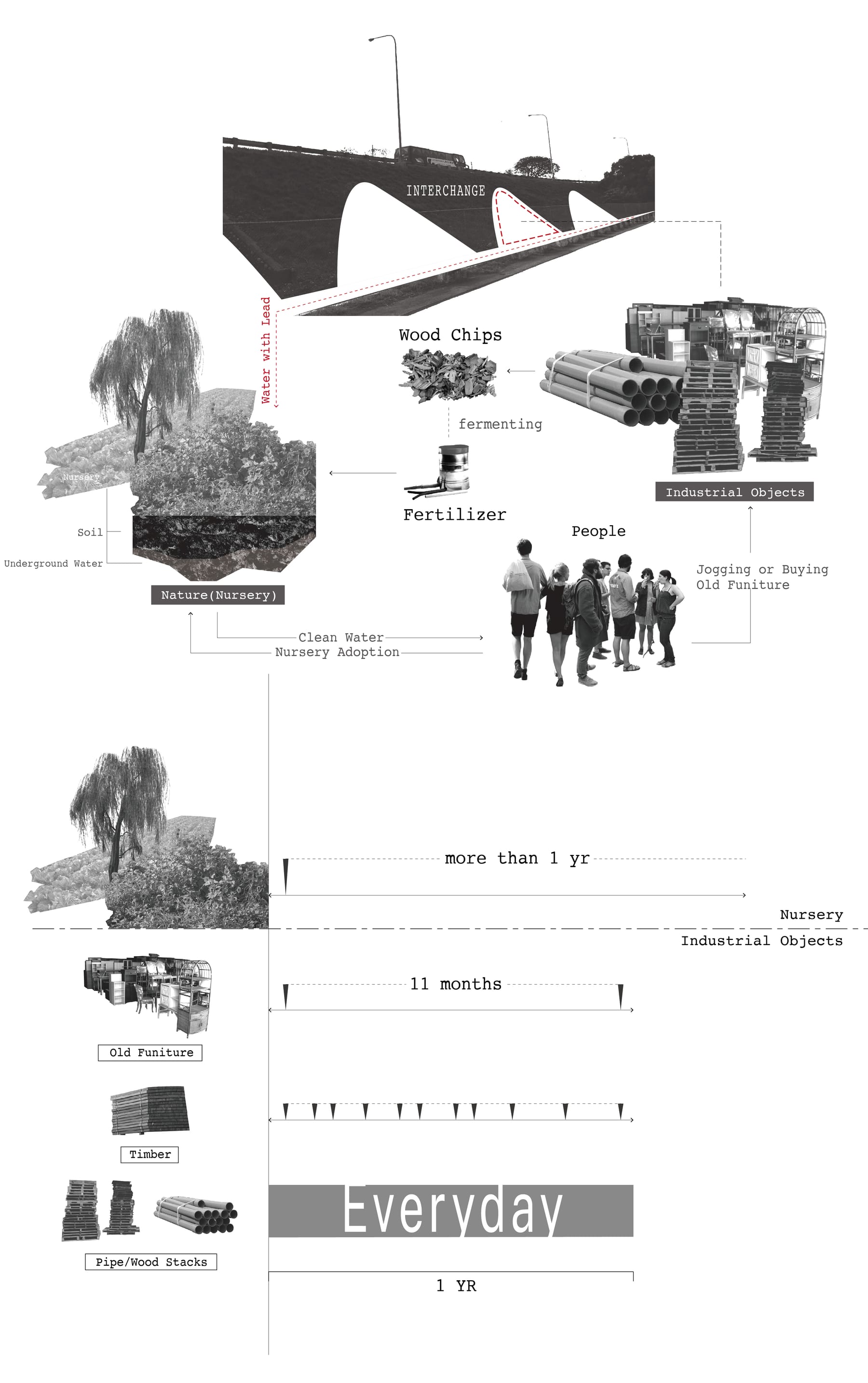
Industrial products are woven together with nature, people, and the original infrastructure landscape. Each material and detoxifying plant follows its own life cycle, differentiating the spatial enclosures and calibrating the range of human activities. Nurseries of detoxifying vegetation are established within the circular geometry of the interchange, fertilized by byproducts of nearby workshops. Stacked pipes and wooden pallets form pedestrian paths for joggers; the inventory itself defines the spatial enclosures — for second-hand furniture stores, refurbishing workshops, and an outdoor cinema.
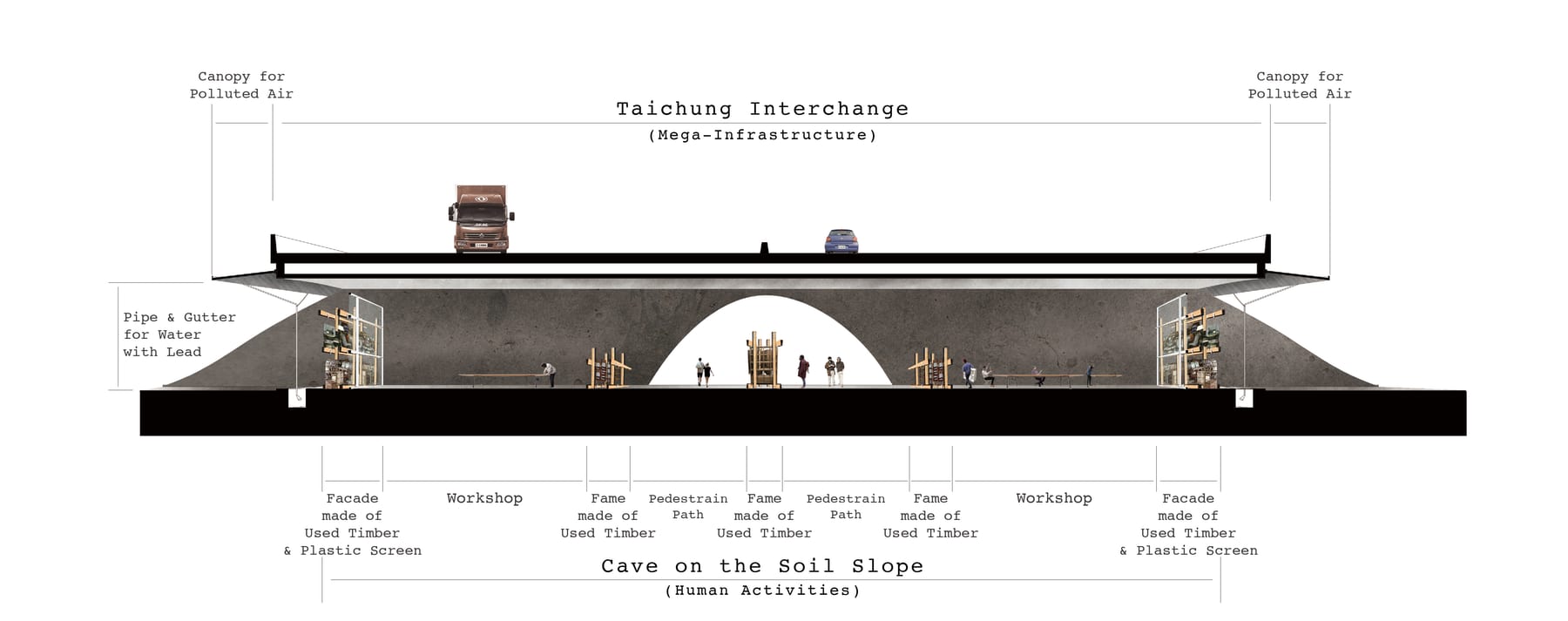
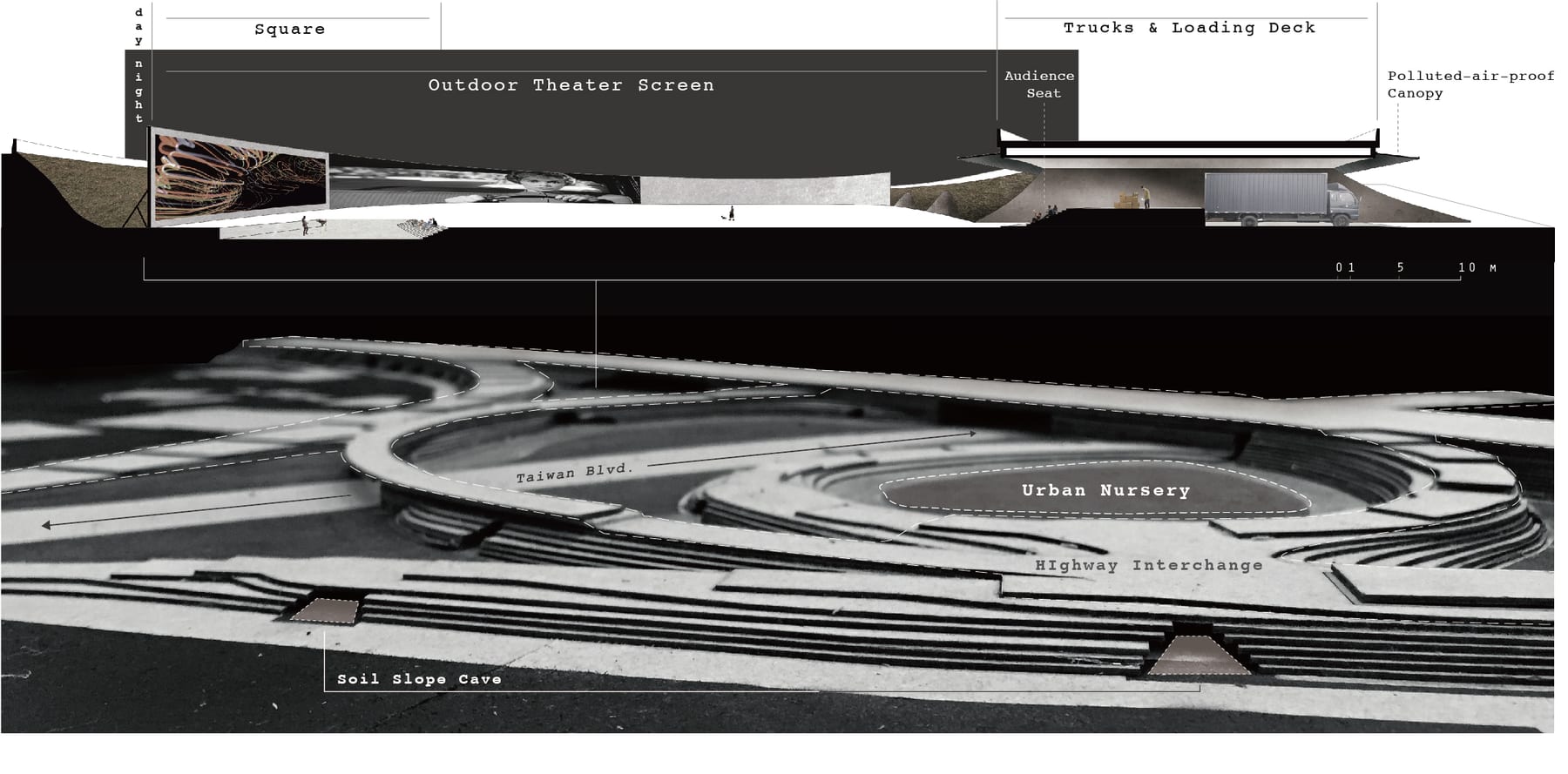
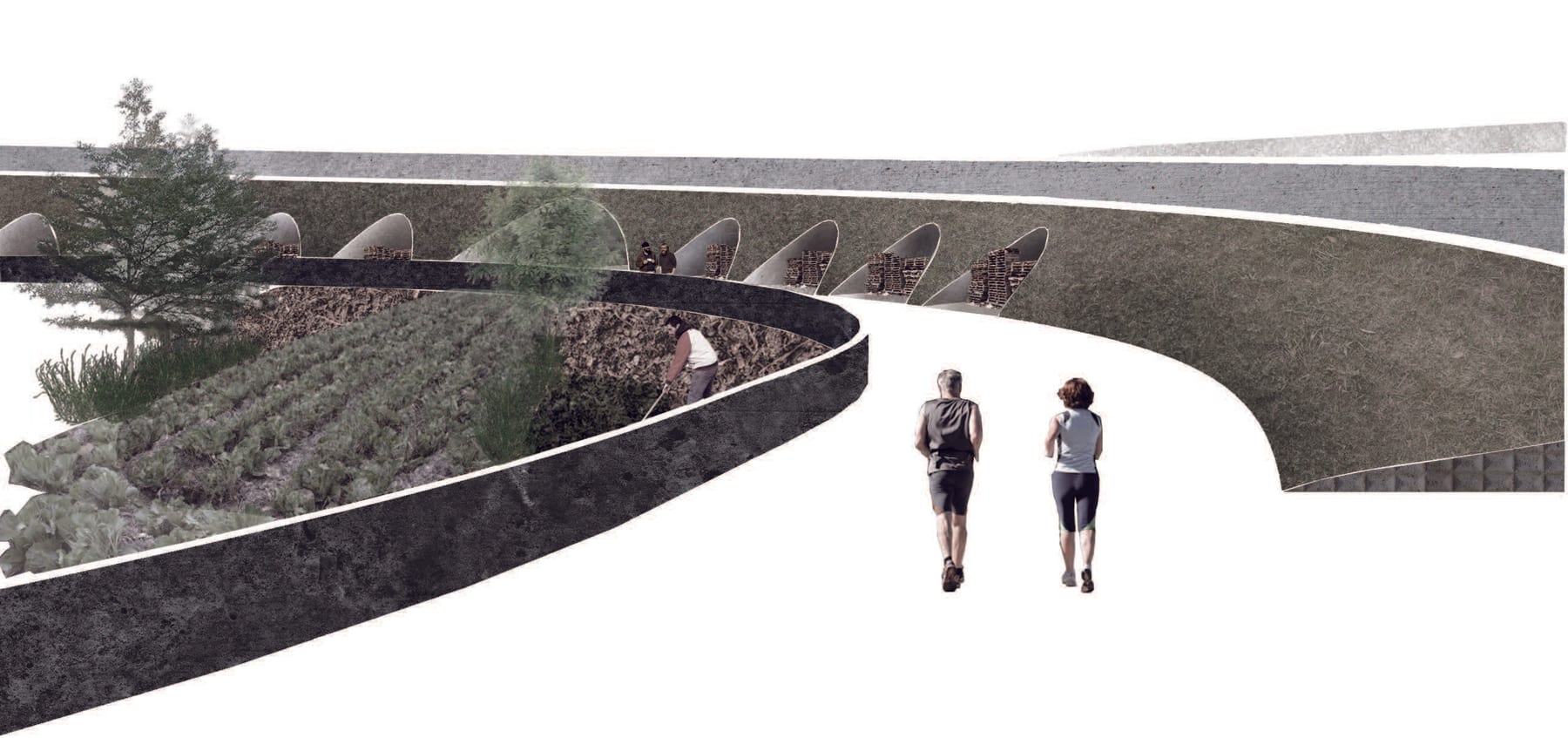
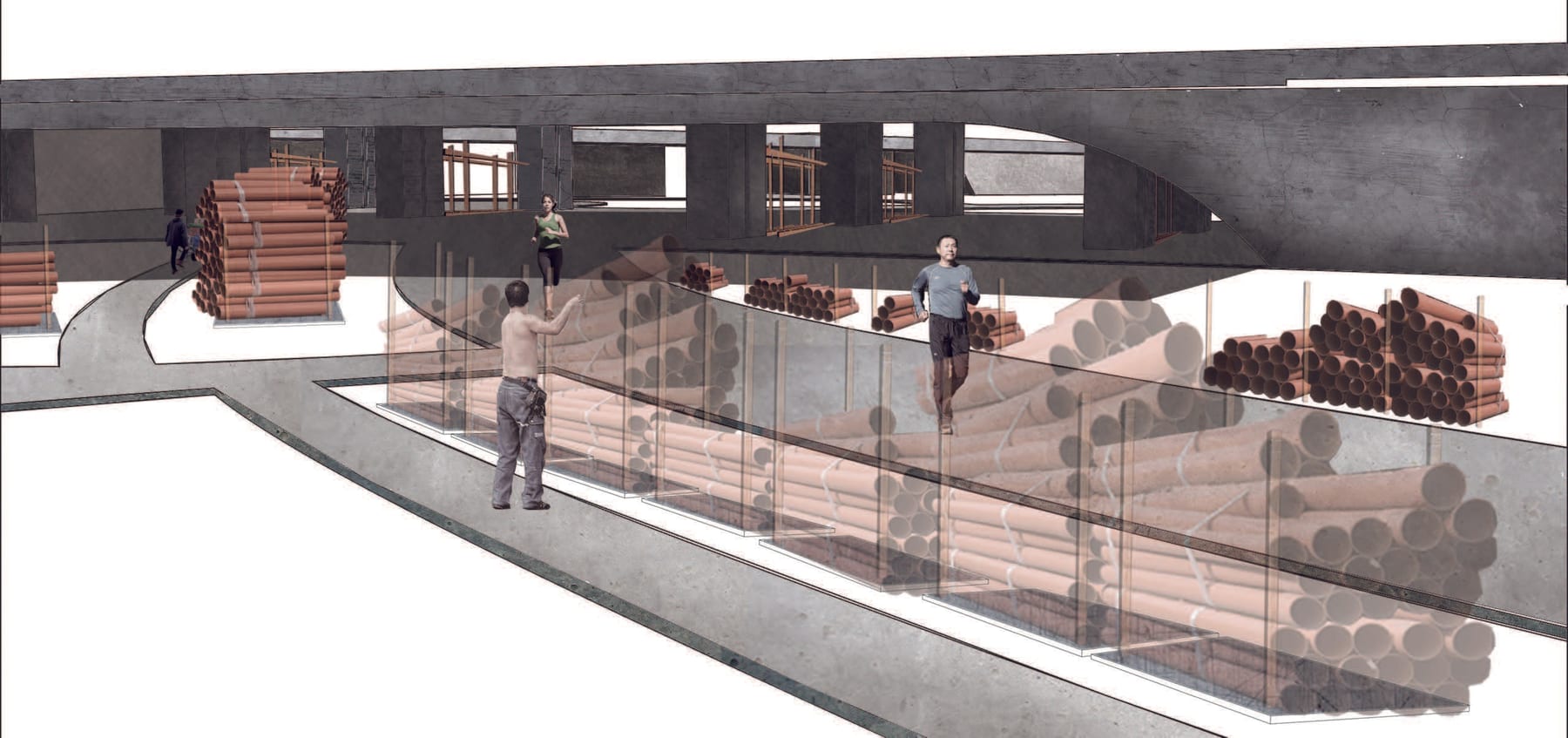
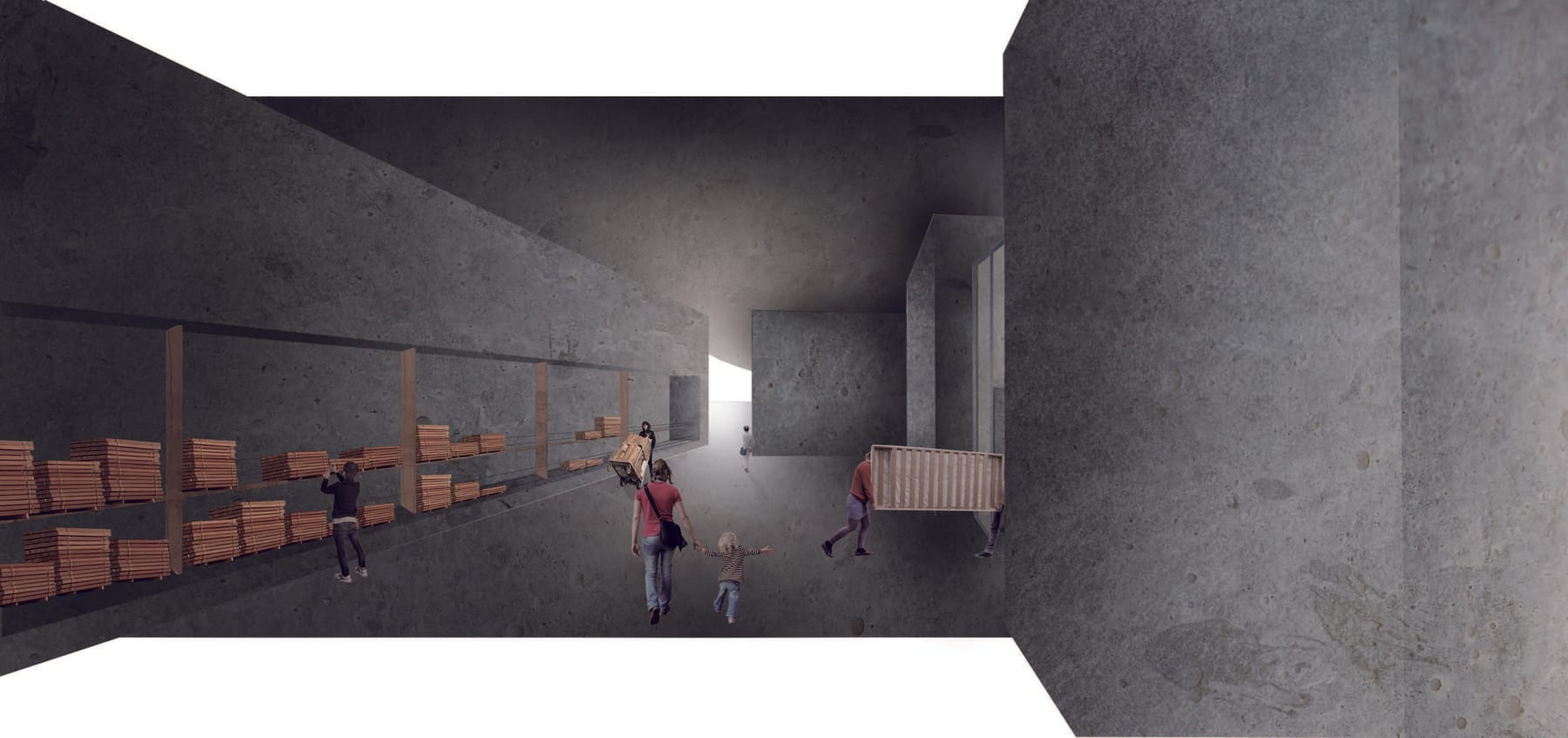
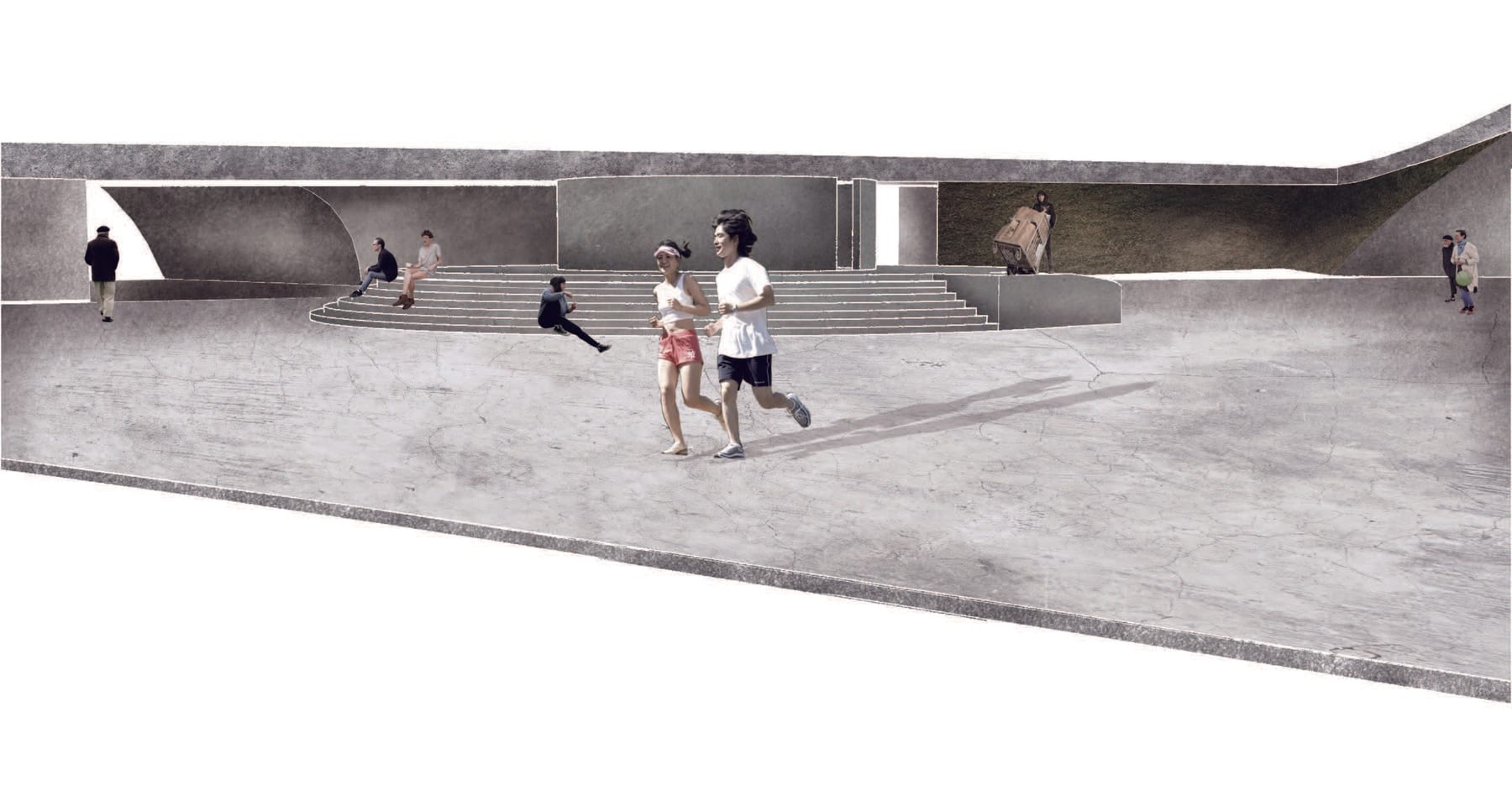
This design approach transforms an engineering-purposed infrastructure into a multi-use landscape park, opening possibilities for interaction between visitors, joggers, and workers alike. The section reveals the structural duality: visitors and workers move beneath frameworks filled with salvaged timber and furniture, demonstrating how daily life is carved out of small-scale architecture in the shadow of enormous infrastructure above. Canopies on each side of the bridge structure deflect polluted air while creating a sheltered semi-outdoor space.